By the Marrium Surgical Pvt Ltd team 20 October 2026 6 min read
Bedsores, also called pressure ulcers or pressure sores, are injuries to the skin and the tissue underneath, caused by staying in one position for too long. In a bedridden or very weak patient, they can start within hours, and once they form they can be painful, slow to heal and prone to infection.
The good news is that most bedsores can be prevented with good daily care. Here is what caregivers at home can do.
Who is most at risk?
- Patients who are bedridden or spend most of the day in a bed or chair.
- Elderly patients with thin, fragile skin.
- Patients after a stroke, spinal injury or major surgery.
- Patients with diabetes, poor nutrition, or incontinence.
- Patients who cannot feel pain or discomfort well, or cannot move themselves.
Where bedsores usually form
Bedsores form where bone is close to the skin and bears weight: the lower back and tailbone, hips, heels, ankles, shoulder blades, elbows and the back of the head. Check these areas every day.
Change position regularly
Moving the patient relieves pressure on the skin. Many nurses advise turning a bedridden patient about every 2 hours, alternating between the back and each side, but follow the turning schedule your doctor or nurse recommends.
- Use pillows between the knees and ankles so bony areas don’t press together.
- Keep the heels off the mattress with a pillow under the calves.
- Lift the patient rather than dragging them across the sheet, which damages the skin.
- Keep the head of the bed as low as is safe, since sitting up for long periods puts pressure on the tailbone.
Use the right mattress
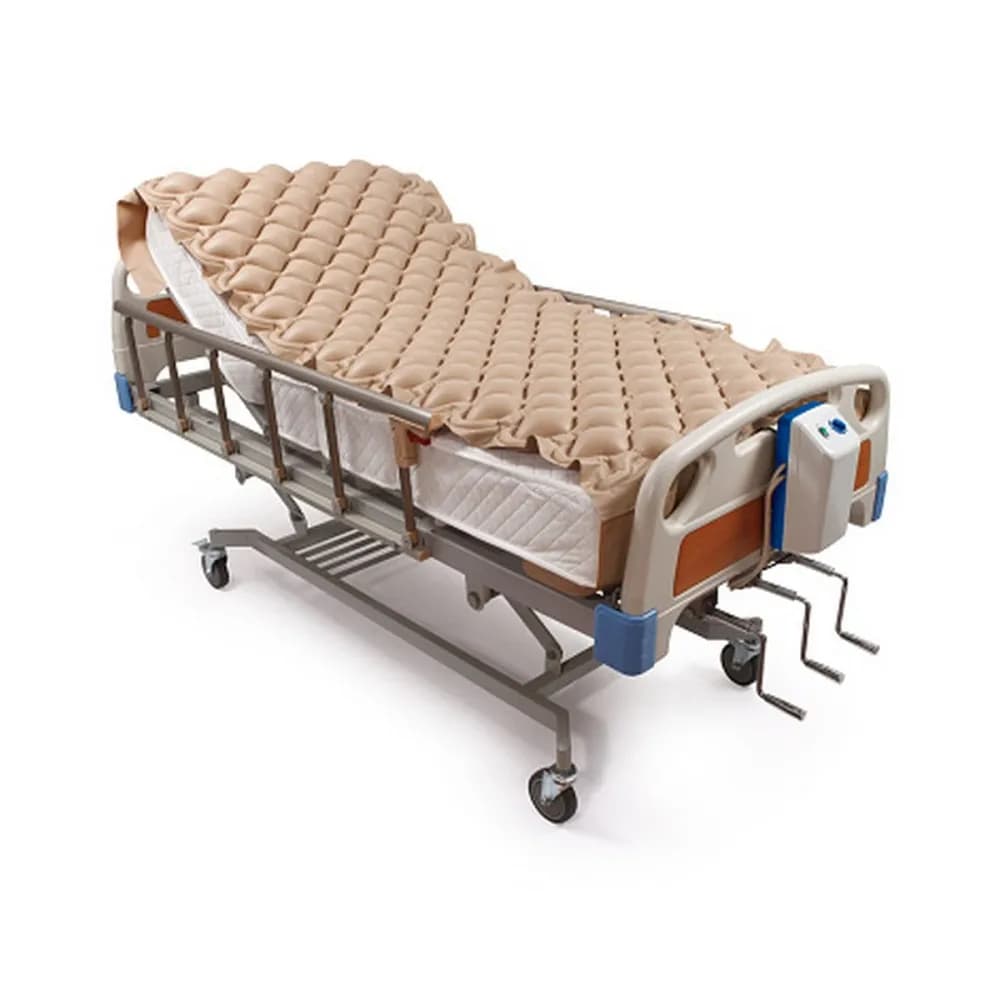
An alternating air mattress inflates and deflates different cells in turn, so pressure keeps moving and no area stays loaded for long. It is one of the most effective tools for preventing bedsores at home, but it works together with turning, not instead of it.
Use a single thin sheet on top; extra layers reduce the effect. Check regularly that the patient is not sinking through to the bed base.
Look after the skin
- Check the skin every day, especially over bony areas.
- Keep the skin clean and dry. Clean gently after any incontinence and pat dry.
- Use a moisturiser for dry skin, but avoid rubbing hard over red areas.
- Keep sheets smooth, dry and free of crumbs.
Food and water matter too
Skin needs protein, calories and fluids to stay healthy and to heal. Encourage regular meals and drinks, and ask the doctor or a dietitian if the patient is eating poorly or losing weight.
Early warning signs
If you notice any of these, take pressure off the area completely and tell the doctor or nurse promptly. Early treatment stops a small problem becoming a serious wound.
- Red, purple or darker patches that do not fade when you gently press them.
- Skin that feels warmer, cooler, harder or softer than the surrounding area.
- Blisters, broken skin or an open wound.
- Pain or tenderness over a bony area.
Frequently asked questions
In a very weak or immobile patient, skin damage can begin within a few hours of unrelieved pressure, which is why regular repositioning is so important.
No. An air mattress greatly reduces pressure, but the patient still needs regular turning, skin checks, good nutrition and clean, dry skin.
Call the doctor or nurse if you see broken skin, a blister, an open wound, signs of infection such as pus, a bad smell or fever, or redness that does not fade.
This article is general information, not medical advice. Always follow the advice of the patient’s doctor or healthcare professional.
Need equipment or advice?
Our team is available 24/7 and delivers across Karachi.